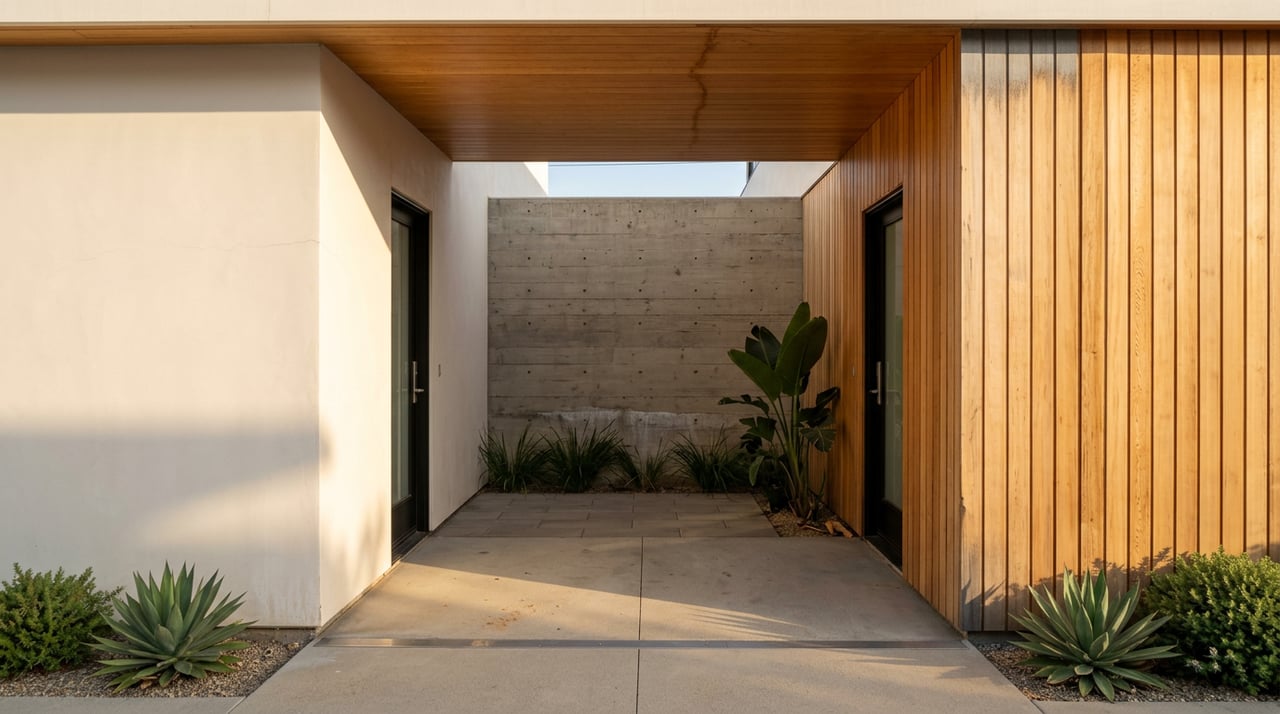
Picture the listing sheet. A Pacific Beach duplex, walk to Garnet Avenue, trailing twelve months of Airbnb income printed right there next to the comps. The agent has done the math for you. All you have to do is close.
Here is what that sheet will not tell you. The short-term rental license attached to that address belongs to the seller, not the house. When the deed changes hands, the license does not come with it. You are not buying an income stream. You are buying a property that used to have one, and applying, from zero, for the right to build your own.
That single fact, buried in San Diego's Short-Term Residential Occupancy ordinance, is the piece of the transaction that catches Pacific Beach buyers off guard more than any inspection finding or title exception.
The number the listing sheet skips
San Diego's STRO ordinance sorts every rental under 30 nights into one of four tiers, based on how often the unit is rented and whether the host lives there. Pacific Beach whole-home rentals fall under Tier 3, and Tier 3 is capped citywide at roughly 1 percent of the city's housing stock, about 5,400 total permits.
Early in 2026, city tracking put the remaining pool at around 964 of those Tier 3 slots. The Treasurer's Office updates that count continuously as licenses get issued, renewed, or surrendered, so treat any published figure as a snapshot rather than gospel. Check the live count on the city's STRO page before you write an offer that assumes availability.
A two-year Tier 3 license runs $1,170 under fees that took effect in March 2026. That is not the expensive part. The expensive part is finding out, after close, that the pool ran dry while you were in escrow.
Non-transferable means exactly what it says
The city's own rules are blunt on this point: STRO licenses are not transferable between owners, and not transferable between properties. A host may hold one license at a time, tied to that host and that address.
So when a seller hands you a trailing twelve months of booking revenue as proof of concept, that revenue is real. It is just not yours yet, and it may never be, if the Tier 3 pool closes before your application clears. The listing sheet shows you what the house has earned. It cannot show you what you are legally permitted to earn, because that permission does not exist until your own application is approved.
This is why "turnkey Airbnb" is doing a lot of work in a listing description that the ordinance does not back up. Turnkey implies you turn a key and the income continues. What actually happens is you turn a key and then file paperwork, hoping the cap has not closed underneath you.
Mission Beach already hit the wall
Pacific Beach is not the first San Diego coastal neighborhood to run this experiment. Mission Beach runs its own parallel system, Tier 4, capped at 30 percent of that neighborhood's housing stock rather than the citywide 1 percent. The city issued all 1,097 available Tier 4 licenses, and the waitlist application period closed on August 15, 2025. Early in 2026, that waitlist sat frozen, zero licenses available, 55 applicants still waiting with no timeline for the pool to reopen.
Existing Mission Beach license holders, operators like Bluewater Vacation Homes, 710 Beach Rentals by Vacasa, and Titan Beach Rentals among them, are now running properties in a market where no new competitor can legally enter. That is the end state of a capped, non-transferable license system: whoever holds a license holds a genuinely scarce asset, and whoever does not is locked out entirely, no matter how much cash they bring to closing.
Pacific Beach's Tier 3 cap works differently in scale, a citywide 1 percent ceiling rather than a 30 percent neighborhood ceiling, and applications remain open as of this writing. But the trajectory from roughly 5,400 slots down toward 964 and shrinking is the same shape Mission Beach traced before its own door closed.
The other layers stacked on top
The STRO license is not the only gate. A few more sit on top of it, and buyers who clear the licensing hurdle sometimes trip on these instead.
- HOA covenants can prohibit short-term rentals outright, independent of whatever the city allows. A valid STRO license does not override a CC&R restriction, and several coastal buildings in the area already ban STRs regardless of city permission.
- Accessory dwelling units cannot be used for short-term rental at all. San Diego's municipal code has prohibited ADU short-term use since October 15, 2017, with an exception only for companion units permitted before that date. If the appeal of a property includes a detached unit you plan to rent nightly, confirm its permit history before you count that income anywhere.
- State law now feeds the enforcement pipeline directly. Senate Bill 346, effective January 1, 2026, requires booking platforms to share host and listing data with the city, which means the days of quietly testing a listing while an application sits in the queue are over. Unlicensed operation carries fines starting at $1,000 per day.
What the reward actually looks like right now
None of this means short-term rental income in Pacific Beach has stopped being worthwhile. It means the math is less generous than the headline nightly rate suggests. Citywide, short-term rental revenue actually fell 3.7 percent year over year through June 2026, even as occupancy climbed 3.8 percent, because average daily rates dropped 7.5 percent over the same stretch. The market is rewarding active pricing management, not passive ownership of a license.
Coastal properties in Pacific Beach, La Jolla, and Encinitas do outperform inland San Diego units on occupancy, typically holding in the 60 to 75 percent range. The city-wide average across roughly 16,000 active listings sits near $336 a night with about $38,600 in trailing twelve-month revenue per listing. A well-run Pacific Beach property likely beats that average. The point is not that the income is fake. The point is that the income depends on a license you have to earn on your own timeline, in a market that already punishes owners who assume the license is the hard part and the pricing takes care of itself.
Before you write the offer
- Ask the seller for the actual STRO license number and tier, not just a claim that the property is licensed.
- Check the city's live STRO tracker yourself to confirm whether Tier 3 slots remain open in the current cycle.
- Get written acknowledgment in your purchase agreement that the license does not convey and budget both the time and the $1,170 fee for your own application.
- Pull the HOA governing documents and look specifically for short-term rental restrictions that would apply even with a valid city license.
- If an ADU is part of the appeal, verify its permit date before assuming it can generate nightly income.
FAQ
Does the seller's short-term rental license transfer when I buy a Pacific Beach property? No. San Diego's STRO ordinance ties every license to a specific host and a specific dwelling unit. A sale ends the seller's license at that address, and the buyer must submit a new application under whatever tier and cap conditions exist at the time.
Can I still apply for a new Tier 3 license in Pacific Beach right now? Applications for Tier 1, Tier 2, and Tier 3 licenses remain open as of this writing, unlike Mission Beach's Tier 4, which closed its waitlist in August 2025. Tier 3 availability citywide has been shrinking, so confirm current status directly with the city before assuming a slot will be there when you need it.
Does my HOA's approval matter if the city already licensed the property? Yes. City licensing and HOA governance are separate systems. A homeowners association can prohibit short-term rentals in its CC&Rs regardless of what the city permits, and several coastal buildings already do.
If you are weighing a Pacific Beach purchase against its actual STR economics, not just the trailing revenue on a listing sheet, that is exactly the kind of due diligence Monroe Herington works through with buyers before an offer goes in. Get Exclusive Listing Opportunities.